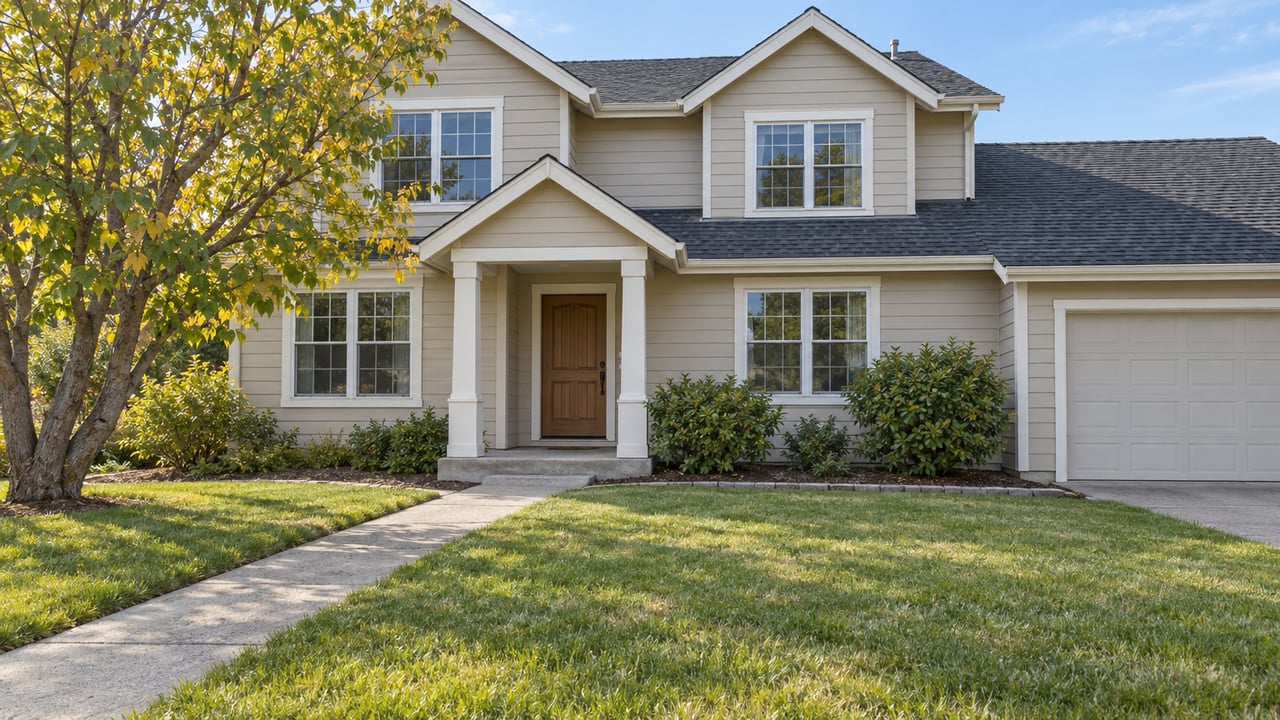
The Navy Approved the Price for Concord's Base Land. Why Buyers Still Shouldn't Wait for Those Homes
Two things happened within a week this fall. On September 24, 2026, the City of Concord announced that the U.S. Navy had approved the term sheet setting the price and payment terms for about 2,422 acres of the former Concord Naval Weapons Station. On September 29, Governor Newsom signed Senate Bill 328, which became Chapter 785 of the Statutes of 2026. Both items are written up as progress toward 12,272 new homes, and they are.
The first homes still sit behind a Specific Plan due around 2029 and a land transfer in 2030. The approvals this fall removed risk from a project that will be built over 30 years. If you're comparing Concord with Pleasant Hill, Walnut Creek or Martinez right now, you're competing for homes that already exist, and the base won't change that for a long time.
The city's own schedule shows the timing. Here are the confirmed milestones, from the city and from Bay City News reporting:
| Milestone | Date | Source |
|---|---|---|
| City Council approves Navy term sheet, unanimously | May 26, 2026 | City of Concord |
| Navy approves term sheet | Announced Sept. 24, 2026 | City of Concord |
| SB 328 signed and chaptered | Sept. 29, 2026 | California Legislature |
| Specific Plan work begins | Winter 2026–27 | City of Concord |
| Community engagement begins | Early 2027 | City of Concord |
| Specific Plan likely goes to City Council | Summer 2029 | Bay City News |
| Land transfer and first Navy payment | 2030 | ccpulse.org |
| Full build-out | About 30 years | City of Concord, Bay City News |
The city's September 24 announcement says the master developer, Brookfield, will lead the Specific Plan. Both the city and Brookfield are hiring consultants, and the work starts this winter. The Specific Plan sets the street layout, land uses and design standards for the site. Under the timeline Bay City News reported, it is likely to reach the City Council in summer 2029. A May report on ccpulse.org put the first payment to the Navy at the time of transfer, in 2030.
The term sheet sets payment terms for the land. The Specific Plan comes after that, and homes come after the plan.
If you've followed this project, you've probably wondered why it has taken so long. In that May ccpulse.org report, Guy Bjerke, then Concord's director of economic development and base reuse, said the Navy had had around 1,000 acres ready for transfer for almost a decade. He also said, "It took longer than I thought it would to get to this agreement." Part of the slowdown was a legal problem built into how the land moves.
The base doesn't change hands in one deal. The land moves in pieces, first from the Navy to the city and then to the master developer. California's Surplus Land Act applies to public land a local agency disposes of. The Senate floor analysis of SB 328 describes the risk this way:
"Because the CNWS site will be transferred piecemeal from the Navy to the City, and then to the master developer, each transfer of property introduces the possibility that the SLA will require that property to be sold to an affordable housing developer, instead of to the intended master developer that is coordinating development of the larger site and investing in the costly infrastructure for the project."
For a developer paying for roads, utilities and the rest of the infrastructure across thousands of acres, that's a serious problem. Every parcel transfer was another chance for the plan to break apart. According to the chaptered bill text, SB 328 creates a narrow exemption for this site. It requires mixed uses and at least 10,000 homes, with at least 25 percent set aside as lower-income housing, held affordable for 55 years for rentals and 45 years for owner-occupied homes. The law treats the land as disposed of once the disposition and development agreement is approved, not at each later transfer. Most challenges have to be filed within 180 days after the state housing department is notified. A challenge is still allowed later if the finished project misses the 25 percent affordability requirement.
The bill also handles environmental review. The Assembly committee analysis said: "SB 328 does not exempt qualifying CNWS projects from CEQA—it leverages CEQA review already completed for CNWS." Projects that follow the adopted plan and stay within its caps, about 12,272 homes and 6,115,718 square feet of commercial space, are conclusively presumed to be covered by the city's 2010 environmental impact report and its 2012 addendum. The Judicial Council has until July 1, 2027, to adopt rules aimed at resolving covered CEQA cases, appeals included, within 270 days where feasible.
Mayor Laura Nakamura said in the city's September 30 release that SB 328 gives "the City of Concord, Brookfield, and Concord residents certainty to move from vision to reality." The law protects the plan from being picked apart one parcel at a time and from repeating environmental review. It doesn't speed up the Specific Plan, and it doesn't move the 2030 land transfer.
The state Department of Finance's 2026 estimate counted 48,246 housing units in Concord as of January 1, 2026. The base plan would add about a quarter to that total, which is a big change for the city over time.
Spread across 30 years, though, 12,272 homes averages about 409 homes a year, or under 1 percent of Concord's current housing count each year. Actual delivery won't be that even. The May ccpulse.org report described the project as five phases, with the land transfer set for 2030. So the base won't ease the city's housing supply in the next few years.
The plan's other pieces are on the same long schedule. Bay City News listed a 75-acre first responder training facility, a 4-acre veterans community center, a $5 million sports park, 16 acres for permanent supportive housing, 10 acres for food bank expansion and 5,038 acres for Thurgood Marshall Regional Park. The city's figures include about 6 million square feet of commercial space supporting up to 26,500 jobs and more than 800 acres of local parks and trails.
You'll see two different dollar figures for the land. The East Bay Times reported on October 30 that the Navy agreed to sell the 2,422 acres to the city for $40 million, and it gave the project's cost as at least $2.5 billion. Both figures came from the city's public information officer, Colleen Awad, who also said the plan "is not happening all at once." The May ccpulse.org report described a project of more than $6 billion. It said Brookfield would pay the Navy $628 million over the build-out, starting with $4.6 million at transfer in 2030. The $40 million figure is a sale price for the acreage. The $628 million figure is a schedule of payments spread over 30 years of construction.
Because the base isn't adding supply soon, the market that matters for a Concord buyer is the county's existing homes. In September 2026, the most recent month the California Association of Realtors has reported, Contra Costa County's median price for an existing single-family home was $870,000, up 0.1 percent from a year earlier. Sales were down 5.7 percent year over year. Inventory was 2.7 months in September, down from 2.9 a year earlier, and the median home sold in 19 days, compared with 22.
Fewer homes are selling, and the ones that list are selling faster from a slightly smaller supply. Prices held steady. Ordinary resale listings set that pace, and they'll keep setting it through the Specific Plan years. If you're timing a purchase around the base, the dates above suggest you'd be waiting through the rest of this decade at least.
The park follows the same pattern. The East Bay Regional Park District lists Thurgood Marshall Regional Park, Home of the Port Chicago 50, as closed with no public access except for occasional tours and naturalist-led programs. In 2022, the district hoped to open the first staging area in 2025. Its South of Bailey Road project page now expects construction to start in 2027, depending on funding and permits.
Who is building it? Brookfield Properties. The City Council accepted Brookfield's term sheet on March 19, 2024. Earlier efforts didn't hold. Lennar's deal ended in 2020 over a labor dispute, and the council rejected Concord First Partners' term sheet 3–2 on January 28, 2023.
Where is the site? The East Bay Times describes it as south of Highway 4 and east of Port Chicago Highway.
How can I follow it? The city points residents to concordreuseproject.org, and community engagement on the Specific Plan is expected to start in early 2027.
This post summarizes public reporting and legislation as general information. It isn't legal or financial advice, so check how any of it applies to your situation with the right professional.
If the base reuse plan is part of how you're weighing Concord against its neighbors, we're happy to go through what's for sale near the site and around town with you. Reach out to Jeff Snell to schedule a local market consultation or get a free valuation of the home you'd be selling first.
We pride ourselves on informing and educating our clients in order to make better real estate decisions. Contact us today to find out how we can be of assistance to you!
Get in Touch With Our Team to Learn More
Jeff Snell & Lynda Snell
93 Moraga Way Ste 103 Orinda CA 94563 Jeff Snell | CA DRE# 01333422