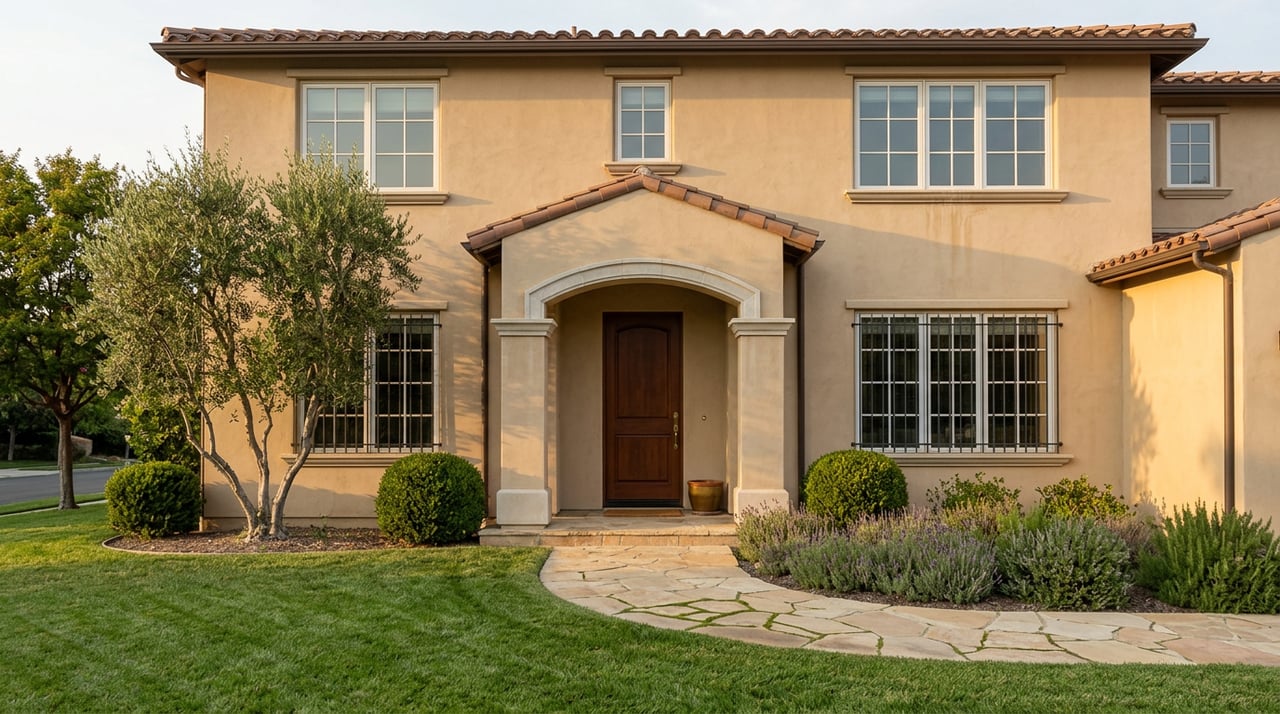
Two San Ramon Homes, Same Price, Very Different Tax Bills
Picture two three-bedroom homes in San Ramon's Dougherty Valley, listed within a few thousand dollars of each other the same weekend. One sits in Gale Ranch. One sits in Windemere. Both buyers get their offers accepted, both close within days of each other, and both feel like they landed a fair deal.
Then the first full property tax bill shows up, and it is not close at all.
The gap has almost nothing to do with what either buyer paid for the house. It comes down to how these two communities solved the same problem twenty years apart from each other, in opposite ways, and most buyers don't find out which solution they bought into until the bill is already in their hands.
Every master-planned community built after Proposition 13 had to answer the same question: who pays for the parks, the streets, the sidewalks, and the landscaping once the developer moves on? Gale Ranch answered it with a traditional homeowners association. Owners pay private dues, an association manages the budget, and the arrangement shows up in the standard HOA disclosure packet during resale.
Windemere answered the same question a different way. Rather than a conventional HOA, the community was financed through a Community Facilities District, and the ongoing costs for street sweeping, park and median landscaping, street lighting, and community services are collected through a special tax that rides on the county property tax bill. Most people know this charge by its other name: Mello-Roos.
That distinction matters more than it sounds like it should. HOA dues are a private contract you can read in a resale package before you write an offer. A Mello-Roos charge is a public tax lien tied to the parcel, and it shows up in a completely different part of the transaction, on the county tax bill, in the Transfer Disclosure Statement, and eventually in your lender's underwriting math. A buyer comparing two similarly priced homes across these communities on sticker price alone is comparing two different financial products without realizing it.
San Ramon's citywide numbers back this up in a way that's easy to verify. Recent property tax data puts San Ramon's median effective property tax rate at 1.25%, higher than both the California state median of 1.21% and the national median of 1.02%. That gap alone tells you San Ramon carries more layered local assessments than a typical city.
Break the city down by ZIP code and the picture sharpens. Homeowners in 94582, which covers much of Dougherty Valley including Gale Ranch and Windemere, carry a median effective rate of 1.31%. Homeowners in 94583 pay 1.19%. That difference traces mainly to how school district levies and local special assessment districts happen to fall across different pockets of the same city.
If you remember only one number from this post: the same city can produce a $6,362 difference in your annual tax bill depending on which ZIP code the parcel sits in.
That number comes straight from the range those two ZIP codes produce citywide, from $8,688 on the low end to $15,050 on the high end, against a citywide median bill of $12,051. A 0.12 percentage point spread sounds small until you translate it into a dollar figure that shows up every single year you own the home.
Here's where it gets more complicated for anyone shopping specifically inside Dougherty Valley. Many parcels there carry more than one overlapping Community Facilities District, not just one, and each district has to be checked separately because they don't combine into a single tidy line item. One CFD might fund the original infrastructure bonds from the community's initial buildout. Another might fund an entirely separate improvement approved in a later phase. Both can sit on the same parcel at the same time.
Proposition 13 caps the base property tax rate at 1% of assessed value, and that cap is the reason most California buyers feel reasonably confident estimating their tax bill from the purchase price alone. Mello-Roos doesn't play by that rule. It's a special assessment rather than an ad valorem tax, which means it isn't calculated as a percentage of what you paid for the home. It's a fixed or formula-based charge tied to the parcel and the bond obligation behind it, and Prop 13's cap simply doesn't apply.
One line that shows up on nearly every San Ramon tax bill, whether the parcel sits inside a CFD or not, is a flat $144 annual parcel tax for the San Ramon Valley Unified School District. Voters renewed this charge under Measure Q in November 2024, and it funds about $6.8 million a year district-wide, with exemptions available for seniors and residents with disabilities. It is a completely separate mechanism from a development-specific Mello-Roos charge, even though both appear as special tax lines on the same bill and are easy to confuse the first time you're reading one.
This pattern is about to get more relevant, not less. Bishop Ranch, the roughly 600-acre business campus that anchors San Ramon's job base, is shifting from a corporate office park into something closer to a residential district as major tenants like Chevron move out. Sunset Development, the family-run company that has owned the campus since 1978, has laid out plans for more than 8,400 new homes there over the next two decades.
The first concrete piece of that plan is already public. Sunset Development selected national homebuilder Lennar to construct Canopy, a 27-acre neighborhood of 255 detached single-family homes replacing the former BR8 office site near Executive Parkway and Bishop Drive. The plan connects the new neighborhood to Bartlett Pear Park and its trail with a continuous sidewalk, sits right beside SummerHill's existing City Village community, and is expected to begin construction in mid-to-late 2027. Nearby, AvalonBay is building a separate 456-unit community on 5.7 acres with amenities like a pool, fitness center, and pet spa, and San Ramon has approved its first 100% affordable housing community at Bishop Ranch through a partnership with Eden Housing, with construction slated for late 2026.
No public CFD has been announced for Canopy as of this writing. But Dougherty Valley's parks, trails, and streets were financed through exactly this kind of district two decades ago, and Bishop Ranch's new neighborhoods will need the same category of shared infrastructure, sidewalks, plazas, park connections, before a single family moves in. When these homes come to market, asking whether a new district is funding that infrastructure belongs on the question list right alongside asking about AvalonBay's HOA structure or Canopy's builder warranty.
Is Mello-Roos the same thing as an HOA fee? No. HOA dues are a private charge that fund amenities an association decides on. Mello-Roos is a public special tax that funds infrastructure like roads, parks, and public safety, and it stays on the county tax bill until the district's bonds are paid off.
Does a Mello-Roos tax ever go away? Yes, eventually. Every Community Facilities District has its own payoff timeline tied to when its bonds retire, and that timeline varies by district. The Rate and Method of Apportionment for the specific parcel is the document that spells out the end date.
Will the SRVUSD parcel tax show up separately from any Mello-Roos charge? Yes. The $144 annual charge renewed under Measure Q funds the school district directly and applies across San Ramon Valley Unified regardless of whether a home sits inside a CFD. It's a different mechanism from a development-specific Mello-Roos line, even though both land on the same bill.
Does carrying a CFD hurt resale value? It can factor into how buyers compare homes. A future buyer will run the same total-cost math you're running now, and a stacked CFD can push a comparably priced home toward a longer time on market or a price adjustment against a similar home without one.
Whether you're weighing a Gale Ranch resale against a Windemere resale, or you're tracking what Canopy's first phase will actually cost once the dust settles on financing, this is the kind of math worth running before you write an offer, not after your lender calls with questions. Jeff Snell has walked San Ramon families through this exact comparison for years, alongside Lynda, and we're glad to pull the actual county tax bill for any address you're considering. Reach out for a free home valuation or a local market consultation, and let's read the fine print together before the yard sign talks you into anything.
We pride ourselves on informing and educating our clients in order to make better real estate decisions. Contact us today to find out how we can be of assistance to you!
Get in Touch With Our Team to Learn More
Jeff Snell & Lynda Snell
93 Moraga Way Ste 103 Orinda CA 94563 Jeff Snell | CA DRE# 01333422